“Just give me stainless” is one of the most expensive assumptions in UAE procurement. Stainless steel is a family of alloys, not a single material — and in the Gulf’s salt-laden, humid climate, the difference between SS304 and SS316 can decide whether a fastener lasts ten years or pits and fails in a single season. This guide explains the composition, corrosion behaviour, cost difference and, most importantly, which grade to specify for UAE conditions.
The quick answer
For general, dry or inland use, SS304 (A2) is the cost-effective choice. For coastal, marine, chemical or salt-exposed environments — which describes much of the UAE — SS316 (A4) is the correct specification. The single reason is molybdenum.
What’s actually different: composition
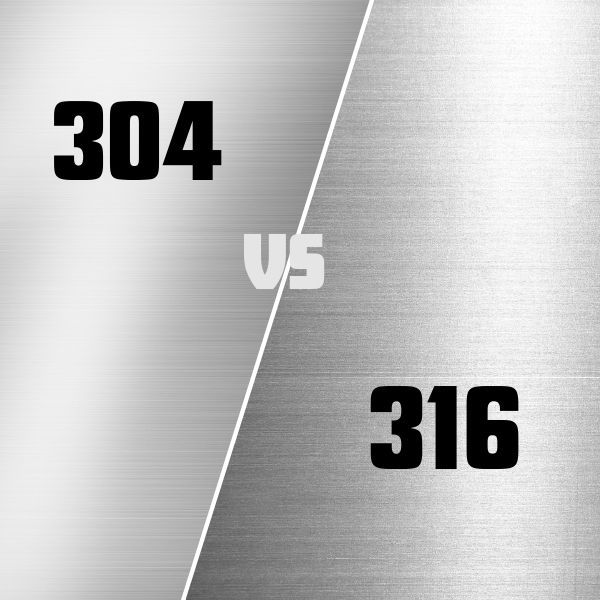
Both grades are austenitic stainless steels with excellent corrosion resistance in normal conditions. The critical difference is that SS316 contains 2–3% molybdenum, which SS304 does not. Molybdenum dramatically improves resistance to pitting and crevice corrosion caused by chlorides — the salt found in coastal air and seawater.
| Property | SS304 (A2) | SS316 (A4) |
| Chromium | 18–20% | 16–18% |
| Nickel | 8–10.5% | 10–14% |
| Molybdenum | None | 2–3% |
| Chloride/salt resistance | Good (general) | Excellent (marine) |
| Typical UAE use | Inland, sheltered, indoor | Coastal, marine, chemical |
| Relative cost | Baseline | ~15–25% higher |
Why this matters so much in the UAE
The Arabian Gulf presents one of the most corrosive atmospheres for metal anywhere: high humidity, high temperatures and constant salt aerosol near the coast. Bare carbon steel corrodes quickly, and even standard stainless can pit if under-specified. Independent corrosion mapping puts many coastal GCC sites in the most severe corrosivity categories, driven by chlorides — which is exactly what molybdenum in SS316 defends against.
The 1-kilometre rule
A widely used field guideline: within roughly 1 km of the coastline, specify SS316. This covers most of Dubai’s waterfront developments, marine and port infrastructure, and facade work on coastal towers. Move inland to dry, sheltered locations and SS304 becomes a sensible, economical choice.
Cost: is SS316 worth the premium?
On finished fasteners, SS316 usually carries a 15–25% premium over SS304. That sounds significant until you weigh it against failure: replacing a corroded fastener means disassembly, downtime and re-assembly — routinely many times the original part cost. Where corrosion risk is real, SS316 is almost always the cheaper option over the life of the structure. Where the environment is genuinely benign, SS304 is the smart saving.
A caution on grade authenticity
Because SS316 costs more, mislabelled or counterfeit “316” does circulate in the market. Buy from a supplier who can confirm grade and, where required, provide material certification. Al Hafoof supplies both grades clearly marked, so you get the grade you paid for.
How to choose — a simple decision path
- Coastal, marine, or within ~1 km of the sea → SS316 (A4).
- Chemical, pharmaceutical or chlorinated-wash environment → SS316 (A4).
- Indoor, dry, inland, or sheltered general construction → SS304 (A2).
- Mixed/uncertain in the UAE’s humid climate → default to SS316 for safety.
- Mixing metals (e.g. stainless bolt into aluminium) → add insulating washers to prevent galvanic corrosion, regardless of grade.
Get the right grade from a UAE stockist
Al Hafoof Hardware supplies both SS304 and SS316 fasteners across Dubai and the UAE — bolts, nuts, screws, studs, washers and anchors — with advice on the correct grade for your environment. Tell us your application and we’ll help you specify it right the first time.
FAQs
Not always. SS316 resists chlorides and salt far better, so it is worth the extra cost near the coast or in chemical plants. For dry, indoor or inland use, SS304 performs well and costs less — paying for SS316 there is unnecessary.
On finished fasteners, SS316 typically costs around 15–25% more than SS304, mainly due to the added molybdenum and higher nickel content. The premium is easily justified when corrosion failure and replacement costs are considered.
As a rule of thumb, specify SS316 (A4) within roughly 1 km of the coastline, for marine structures, and for anything exposed to salt spray. SS304 (A2) is fine for sheltered inland use.
A2 is the fastener designation broadly equivalent to SS304; A4 is broadly equivalent to SS316. The number after a dash (e.g. A4-70) indicates the tensile strength class.
Yes. We stock both SS304 and SS316 bolts, nuts, screws, studs and washers, and can advise on the right grade for your environment. Request a quote for your sizes and quantities.