Choosing the right anchor bolt is one of the most consequential decisions on any construction or industrial project. The wrong material or type leads to corrosion, loosening, or in the worst case structural failure — and in the UAE, where heat, humidity and salt air are constant, material selection matters even more than in temperate climates. This guide covers the main anchor bolt types, the grades available, and which works best for Gulf conditions.
Anchor bolt types explained
Mechanical anchors
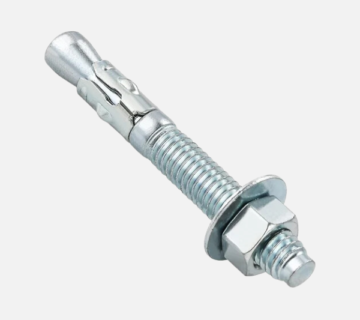
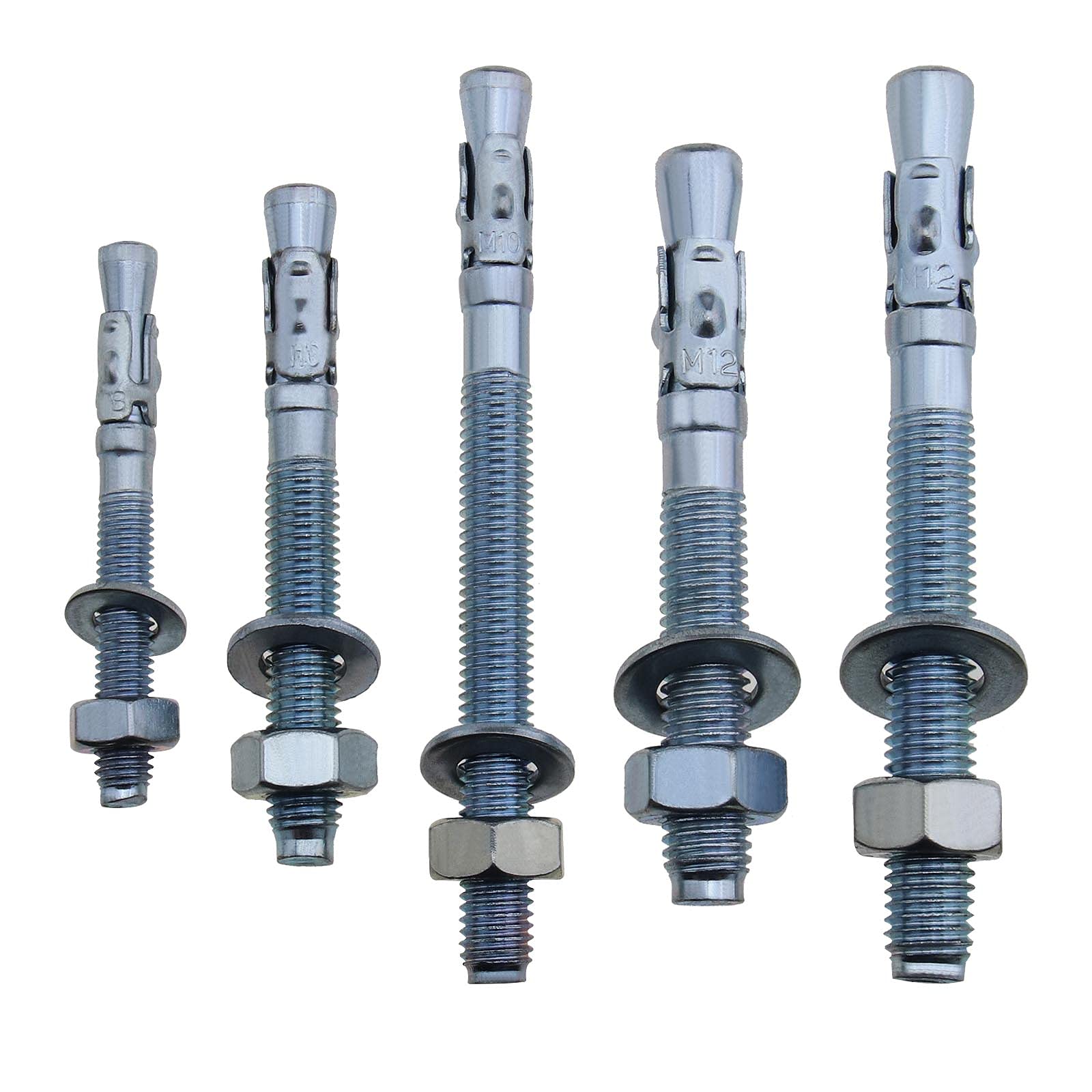
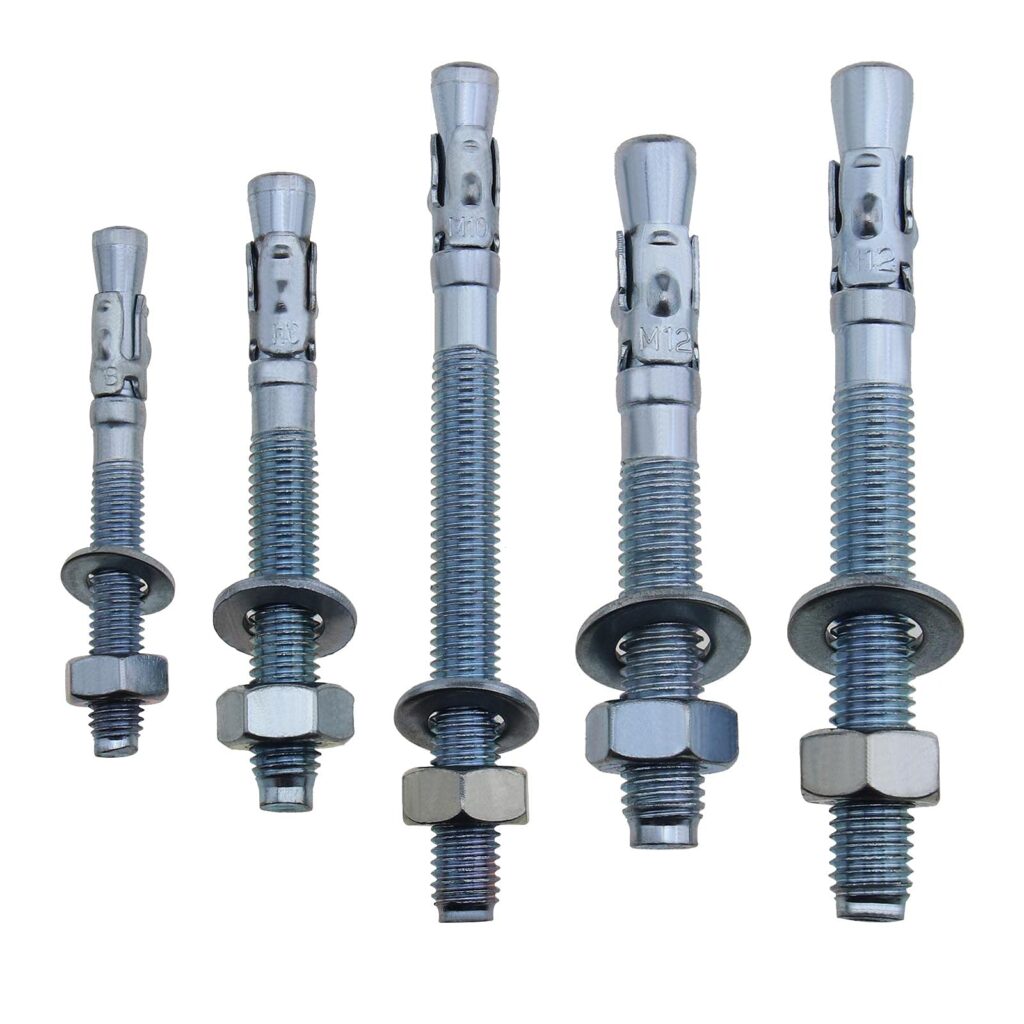
- Wedge anchors — expand against the hole wall as tightened; the workhorse for fixing into sound, uncracked concrete.
- Sleeve anchors — spread load over a larger area; good for brick and block as well as concrete.
- Through bolts — heavy-duty fixings for structural steel and machinery.
- Drop-in anchors — flush internally-threaded anchors for fixtures that may be removed.
Cast-in anchors
- L-shaped and J-bolts — set into wet concrete for column bases, steelwork and equipment foundations.
- Headed anchor bolts — cast in for high-load structural connections.
Chemical (resin) anchors
A stud or threaded bar bonded into the substrate with resin. Chemical anchors excel at high loads, close edge distances, cracked concrete and where a sealed, corrosion-resistant fixing is needed — common in structural, industrial and oil & gas work across the UAE.
Anchor bolt materials & grades
| Material / Grade | Corrosion resistance | Best UAE use |
| Carbon steel (plain) | Low | Dry indoor only |
| Hot-dip galvanised (HDG) | Good | Outdoor/general construction, humid inland |
| SS304 / SS304L (A2) | Very good | General industrial, sheltered outdoor |
| SS316 / SS316L (A4) | Excellent | Coastal, marine, chemical |
| Duplex (2205 / super duplex) | Highest | Offshore, severe chemical/marine |
The pattern mirrors fastener selection generally: the closer to salt water and the harsher the chemistry, the higher up this table you should specify. For most coastal Dubai work, SS316 is the safe default; for dry inland construction, HDG or SS304 is economical and adequate.
Matching the anchor to the job
- General construction & warehouses (inland) → HDG wedge anchors, L/J-bolts.
- Facade, cladding & rooftop near coast → SS316 anchors and roofing bolts.
- Marine, jetty & port infrastructure → SS316L, and duplex for splash zones.
- Refineries & process plants → SS316L / ASTM A193 B8M, chemical or PTFE-coated anchors.
- High load into cracked concrete → chemical (resin) anchors.
Standards to specify against
For high-strength and stainless studs, ASTM A193 (grades such as B7 and B8M) is common; ISO 3506 covers the mechanical properties of stainless fasteners (the A2-70 / A4-70 classes). Quoting the right standard alongside the grade removes ambiguity and protects your project.
Why grade decides everything in the Gulf
Field studies of Arabian Gulf installations repeatedly show premature fastener failure where material was under-specified — bare carbon steel corrodes, and even HDG can be outlived by the structure it holds in splash zones. Specifying the correct grade up front is far cheaper than replacing failed anchors in service.
Source anchor bolts from a UAE stockist
Al Hafoof Hardware supplies the full anchor bolt range — wedge, sleeve, through, cast-in and stainless anchors in SS304, SS316 and HDG — across Dubai and the UAE, in standard and custom sizes. Send us your load, substrate and environment and we’ll help you specify the right anchor.
FAQs
For general construction, wedge anchors and cast-in L- or J-bolts are most common. In the humid Gulf climate they’re typically hot-dip galvanised for corrosion resistance, or stainless (SS304/SS316) where exposure is severe.
Chemical (resin) anchors suit high loads, cracked concrete, close edge distances and applications needing a sealed, corrosion-resistant fixing — common in structural and industrial work. Mechanical wedge anchors suit standard fixings into sound concrete.
SS316/SS316L is the standard for marine and coastal exposure because of its chloride resistance. For offshore or severe chemical environments, duplex grades may be specified.
Yes. Al Hafoof supplies anchor bolts in standard sizes and can provide custom lengths and quantities for projects, with fast delivery across the UAE.
Common references include ASTM A193 (e.g. B7, B8M) for high-strength and stainless studs, and ISO 3506 for stainless fastener mechanical properties. Ask for the grade and standard that matches your load and environment.