Lifting eye bolts, eye nuts and cast-in lifting sockets look simple, but they are safety-critical parts. Most failures don’t come from poor steel. They come from lifting at the wrong angle, using the wrong type of eye, or an eye bolt that was never screwed fully home. On UAE sites, where precast elements, rooftop plant and marine equipment are lifted every day, those mistakes are costly and dangerous.
This guide gives you the DIN 580 lifting eye bolt load chart, explains why sling angle cuts capacity so sharply, and covers eye nuts, precast lifting sockets and hooks — with a pre-lift checklist your team can use.
This guide is general information. Lifts must be planned by a competent person, following the manufacturer’s instructions and the working load limit (WLL) marked on each item.
Lifting points at a glance
| Item | What it is | Typical use | Key check |
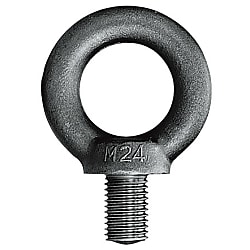
| Lifting eye bolt (DIN 580) | Forged eye with a collar on a threaded shank, screwed into a tapped hole | Motors, pumps, panels, moulds and machinery | Collar seated flat; angle limits apply |
| Lifting eye nut (DIN 582) | Forged eye with an internal thread, fitted onto a stud or bolt | Equipment with protruding studs; lifting via threaded rod | Full thread engagement; seated flat |
| Lifting (casting) socket | Threaded insert cast into precast concrete | Precast panels, beams, slabs, kerbs and chambers | Load class, thread type, concrete strength at lift |
| Eye hook / snap hook | Hook with an eye, with a safety latch or spring gate | Sling terminations, securing and light rigging | Use for lifting only if marked with a WLL |
DIN 580 lifting eye bolt load chart
DIN 580 sets the dimensions and load ratings for forged lifting eye bolts. The working load limits below are per eye bolt, for DIN 580 eye bolts made from C15E steel.
| Thread | Straight vertical lift | Two eye bolts, up to 45° | Fitted on the side of the load, up to 45° |
| M8 | 140 kg | 100 kg | 70 kg |
| M10 | 230 kg | 170 kg | 115 kg |
| M12 | 340 kg | 240 kg | 170 kg |
| M16 | 700 kg | 500 kg | 350 kg |
| M20 | 1,200 kg | 860 kg | 600 kg |
| M24 | 1,800 kg | 1,290 kg | 900 kg |
| M30 | 3,200 kg | 2,300 kg | 1,600 kg |
| M36 | 4,600 kg | 3,300 kg | 2,300 kg |
Values per eye bolt as given in DIN 580 for C15E steel eye bolts. Stainless steel eye bolts are also made to DIN 580, but not every manufacturer rates them identically — always work to the WLL marked on the eye bolt or its certificate.
Why the angle matters so much
When a sling pulls at an angle, the eye bolt is loaded in bending as well as tension. That is why an M12 eye bolt rated 340 kg for a straight vertical lift is rated 240 kg per bolt in a two-leg lift at up to 45°, and only 170 kg when it is fitted to the side of the load.
In practice, a pair of M12 eye bolts at 45° can carry 480 kg — not the 680 kg you would get by simply doubling the vertical rating. Beyond 45° from vertical, standard eye bolts should not be used; choose a swivel lifting point designed for angled loads.
Collar eye bolts vs plain eye bolts
DIN 580 eye bolts have a collar that bears on the surface and resists bending. Plain (shoulderless) eye bolts are for straight vertical pulls only. Bent-wire screw eyes and light eye bolts sold for general hardware use are not lifting equipment and should never be used to lift.
How to install an eye bolt correctly
- Screw the eye bolt fully home so the collar sits flat and tight on the surface, with no gap.
- Check thread engagement: at least one thread diameter in steel, and more in softer materials such as cast iron or aluminium — use the manufacturer’s figure.
- Make sure the tapped hole is clean, the correct thread and deep enough that the eye bolt seats on its collar rather than bottoming out.
- Align the eye with the direction of the sling. Never unscrew the eye bolt to line it up — if it will not align when tight, use a swivel lifting point instead.
- Connect slings with a correctly sized shackle or hook, and never run one sling through two eye bolts.
- Inspect before every use. Take out of service any eye bolt that is bent, cracked, corroded, has damaged threads or an illegible marking.
For connecting slings to lifting points, see our guide to D-shackle types and grades.
Lifting eye nuts (DIN 582)
A lifting eye nut does the same job as an eye bolt but threads onto a stud, bolt or threaded rod. DIN 582 eye nuts are rated on the same basis as DIN 580 eye bolts of the same thread size, and the same rules apply: full thread engagement, the nut seated flat on the surface, and the same angle limits. Check the WLL marked on the nut and make sure the stud it sits on is strong enough for the load.
Lifting sockets for precast concrete
A lifting socket — also called a casting socket or threaded lifting insert — is cast into a precast element so the element can be demoulded, turned, transported and placed. For each lift, a matching lifting device, usually a wire-rope lifting loop or a swivel lifting eye, is screwed into the socket.
Rd thread or metric thread?
Most precast lifting systems use Rd (round) thread, which is coarse and tolerant of concrete residue and rough handling. Metric-threaded sockets are also used. The lifting device must match both the thread type and the load class of the socket — never mix systems.
Typical load classes
| Thread | Common load class |
| Rd12 | 0.5 t |
| Rd16 | 1.2 t |
| Rd20 | 2.0 t |
| Rd24 | 2.5 t |
| Rd30 | 4.0 t |
Standard load classes used by many threaded lifting systems; heavy-duty anchor designs carry more. The safe load in your element also depends on embedment, edge distance and concrete strength — always use the system manufacturer’s design tables.
What decides the right socket
- The element’s weight, plus allowances for suction from the mould and dynamic crane effects.
- How many sockets actually share the load: on a rigid element with four lifting points, design normally assumes only two carry the load unless a spreader beam or load-equalising rigging is used.
- Edge distance, element thickness and anchor length.
- Concrete strength at the time of the first lift.
- Exposure: stainless steel 316 sockets where they stay visible on a façade, to avoid rust staining.
Precast lifting design is normally done to the system manufacturer’s guidance, which for many threaded systems follows the German VDI/BV-BS 6205 guideline for lifting inserts.
Eye hooks and snap hooks
Eye hooks with a safety latch are used to terminate slings and chain for lifting. Snap hooks — the spring-gate hooks used for securing and light rigging — are often not rated for overhead lifting. Only use a hook to lift if it is marked with a WLL, and remove any hook that is cracked, twisted or has a stretched throat opening.
Stainless steel or carbon steel lifting hardware?
On coastal sites, marine work and areas that are washed down, stainless steel 316 (A4) eye bolts resist corrosion far better than zinc-plated steel. For general indoor lifting, forged carbon-steel DIN 580 eye bolts are the usual choice — browse our lifting eye bolts and ask for the marked WLL and certificate for the size you need. Our SS304 vs SS316 guide explains how to choose a stainless grade for UAE conditions.
Pre-lift checklist
- Each lifting point is the right type for the lift and is marked with its size and WLL.
- The load weight is known and within the WLL for the actual sling angle.
- Eye bolts and eye nuts are screwed fully home, collars flat, eyes aligned with the slings.
- No sling leg is more than 45° from vertical.
- Shackles and hooks are correctly sized and hook latches work.
- There is no visible damage, deformation or corrosion.
- The lift is planned and supervised by a competent person.
Need lifting points for a project? Tell us the item (eye bolt, eye nut, lifting socket or hook), thread size, quantity, material and finish, and whether you need material or test certificates. We’ll confirm what’s available from our rigging and lifting range and quote. Request a quote or message us on WhatsApp.
Frequently asked questions
What is the load capacity of an M12 eye bolt?
For a DIN 580 eye bolt in C15E steel: 340 kg in a straight vertical lift, 240 kg per eye bolt in a two-leg lift at up to 45°, and 170 kg when fitted to the side of the load. Always check the WLL marked on the eye bolt you are using.
Can I use an eye bolt for an angled lift?
Collar (shoulder) eye bolts can be used at up to 45° from vertical with the reduced ratings shown in the chart. Plain eye bolts are for vertical lifts only. For angles beyond 45°, use a swivel lifting point.
What is the difference between DIN 580 and DIN 582?
DIN 580 covers lifting eye bolts, which screw into a tapped hole. DIN 582 covers lifting eye nuts, which thread onto a stud or bolt. The installation rules and angle limits are the same.
What thread do precast lifting sockets use?
Most use Rd (round) thread; some systems use metric thread. The lifting loop or swivel eye must match the socket’s thread type and load class.
Are snap hooks rated for lifting?
Many are not. Snap hooks are often made for securing and light rigging. Only use a hook for lifting if it is marked with a working load limit.
Are stainless steel eye bolts as strong as steel eye bolts?
They are made to the same standard, but ratings can differ between manufacturers. Use the WLL marked on the eye bolt or stated on its certificate rather than assuming the C15E steel values.
Standards referenced: DIN 580 (lifting eye bolts), DIN 582 (lifting eye nuts), VDI/BV-BS 6205 (lifting inserts for precast concrete).