Threaded bar is one of the most versatile fasteners on a UAE project. It hangs pipework and cable tray, anchors equipment, ties formwork and bolts pipeline flanges together. But “threaded bar”, “threaded rod”, “all-thread” and “stud bolt” are used loosely — and the wrong standard, grade or coating on an order means delays, failed inspections and rework.
This guide untangles the terms and standards, then gives you a checklist that gets the right product ordered the first time.
Threaded bar vs threaded rod vs stud bolt
| Term | What it usually means | Typical standard | Typical use |
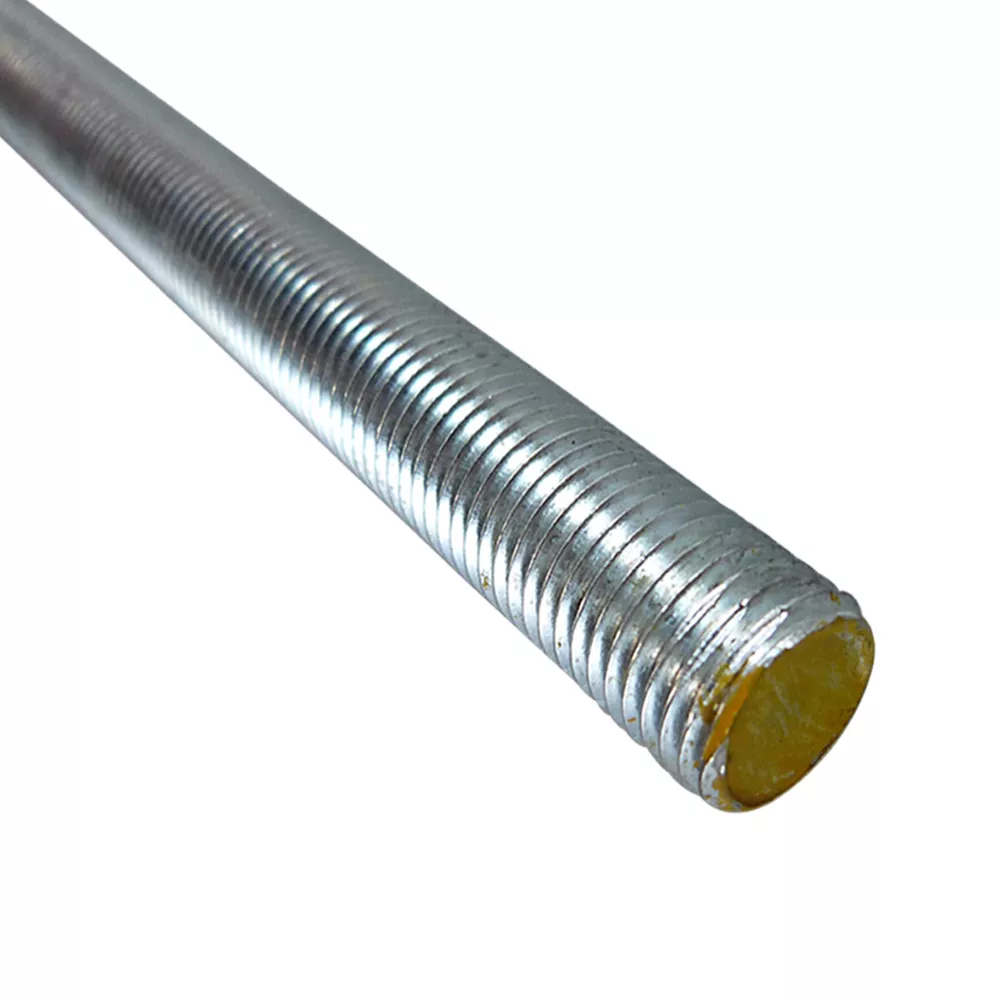
| Threaded bar / threaded rod / all-thread | Rod threaded along its full length, supplied in lengths such as 1 m, 2 m or 3 m and cut to size | DIN 976-1 (formerly DIN 975), with ISO 898-1 or ISO 3506 property classes | MEP hanger drops, anchoring, general fixing |
| Stud bolt (flange stud) | Fully threaded stud cut to a set length, used with two heavy hex nuts | ASTM A193 studs with ASTM A194 nuts; lengths to suit ASME B16.5 flanges | Flanged pipework in oil & gas, petrochemical, power and water plants |
| Tap-end / double-end stud | Threaded at both ends with a plain centre section | For example DIN 938 / DIN 939 | Studs screwed permanently into tapped holes in equipment |
| Tension-bar or threadbar system | Engineered high-strength bar with matching couplers, nuts and anchor plates | The manufacturer’s own system | Ground anchors, tie rods and post-tensioning, to the engineer’s design |
If you searched for “thread bar systems”, you may need a proprietary tension-bar system rather than standard threaded rod. Send us the specification and we’ll advise.
DIN 975 or DIN 976?
DIN 975 was for decades the German standard for threaded rod. It has been withdrawn and replaced by DIN 976-1, last revised in 2016 — but many drawings, BOQs and suppliers still write “DIN 975”. A fully threaded rod ordered to DIN 975 corresponds to the fully threaded form of DIN 976-1. Quoting DIN 976-1 on new specifications avoids confusion.
Grades and materials
| Grade | Material | Typical use |
| 4.6 / 4.8 | Low or medium carbon steel | General fixing and light MEP hangers |
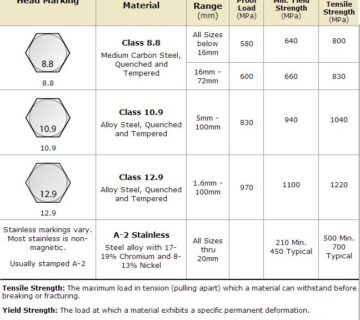
| 8.8 | Medium carbon steel, quenched and tempered | Higher loads, structural connections and anchoring |
| 10.9 | Alloy steel, quenched and tempered | High-strength applications |
| A2-70 | Stainless steel 304 | Indoor and sheltered areas, clean environments |
| A4-70 / A4-80 | Stainless steel 316 | Coastal, marine and chemical exposure |
| ASTM A193 B7 | Chromium-molybdenum alloy steel, quenched and tempered | Flange bolting for high-temperature and high-pressure service |
| ASTM A193 B7M | B7 with controlled, lower hardness | Sour service to NACE MR0175 / ISO 15156 |
| ASTM A193 B8 / B8M | Stainless steel 304 / 316 | Corrosive service; Class 2 (strain-hardened) where higher strength is needed |
ASTM A193 B7 in brief
B7 is the workhorse stud bolt grade for flanged piping in the region’s oil & gas and petrochemical plants. It is a quenched-and-tempered chromium-molybdenum alloy steel with a minimum tensile strength of 125 ksi (860 MPa) and minimum yield strength of 105 ksi (720 MPa) for diameters up to 2½ in (64 mm). B7 studs are normally paired with ASTM A194 grade 2H heavy hex nuts. Where hardness must be limited for sour service, B7M studs with 2HM nuts are specified instead.
Nuts and washers that match
- ASTM A193 B7 studs: ASTM A194 2H heavy hex nuts (2HM with B7M).
- Property class 8.8 rod: nuts of at least property class 8.
- Stainless rod: stainless nuts of the same grade — A2 with A2, A4 with A4 — with an anti-seize compound to prevent galling. See our stainless hex nuts.
- Hot-dip galvanised rod: galvanised nuts tapped oversize to allow for the zinc coating — standard nuts will not run on. GI/MS hex nuts are available for galvanised assemblies.
Coatings for UAE conditions
| Coating | Best for | Note |
| Plain / black (oiled) | Indoor use, items to be painted, temporary works | No corrosion protection once the oil is gone |
| Zinc-plated (electro-galvanised) | Indoor MEP hangers and dry areas | Thin coating — not for outdoor exposure |
| Hot-dip galvanised | Outdoor and structural work, car parks, humid areas | Use oversize-tapped nuts |
| PTFE / fluoropolymer coated | Offshore and coastal flange bolting | Resists corrosion and helps prevent seizing |
| Stainless steel (A2 / A4) | Where protection must survive cutting; A4 near the coast | No coating to damage when cut |
When galvanised rod is cut to length on site, the cut ends lose their protection. Touch them up with zinc-rich paint.
Where threaded bar is used on UAE projects
- MEP hanger drops for pipework, ductwork and cable tray, used with spring nuts and strut channel and beam clamps.
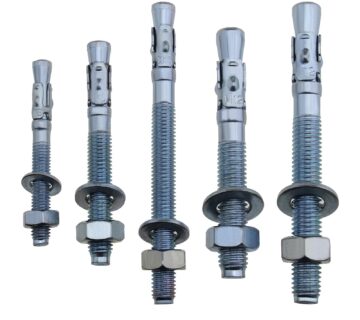
- Anchoring into concrete with chemical or mechanical anchors — see our anchor bolt range.
- Flange bolting with B7, B7M or B8M stud bolts in oil & gas, petrochemical and desalination plants.
- Formwork ties, together with dog bolts and wing nuts.
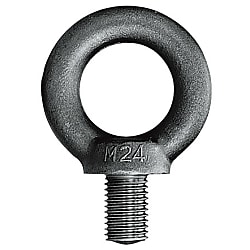
- Lifting from studs with lifting eye nuts.
- Structural tie rods and bracing, to the engineer’s specification.
How to order threaded bar and stud bolts
- Diameter and thread — metric coarse or fine, or UNC for imperial studs.
- Length — full bars (1 m, 2 m or 3 m) or cut lengths, with the quantity for each length.
- Standard and grade — for example DIN 976-1 class 8.8, or ASTM A193 B7.
- Material and coating — see the tables above.
- Nuts and washers — type, grade and how many per stud.
- Certificates — for example EN 10204 3.1 mill test certificates, if your project requires them.
- Delivery — site location and required date.
Al Hafoof stocks stainless steel threaded bar in grades 202, 304, 316 and 316L from M4 to M45, and stud bolts to ASTM A193 B7 and in stainless steel 304/316, in metric and imperial (UNC) sizes — see our stud and threaded rod range.
Have a BOQ or a flange bolting list? Send it to us with the grade, coating and certificate requirements and we’ll quote studs, rods, nuts and washers together. Request a quote or message us on WhatsApp.
Frequently asked questions
Is DIN 975 still valid?
DIN 975 has been withdrawn and replaced by DIN 976-1, but it is still widely quoted. Rod ordered as DIN 975 corresponds to fully threaded rod to DIN 976-1.
What is the difference between threaded rod and a stud bolt?
Threaded rod is supplied in long lengths and cut as needed for hangers, anchors and general fixing. A stud bolt is cut to a specific length — usually for a flange — and supplied with matching heavy hex nuts to a standard such as ASTM A193/A194.
What nut goes with a B7 stud bolt?
An ASTM A194 grade 2H heavy hex nut. For B7M studs in sour service, use 2HM nuts.
Can I use standard nuts on hot-dip galvanised threaded rod?
No. Galvanised rod needs nuts tapped oversize to allow for the zinc coating; standard nuts will not run on.
Which threaded rod should I use for MEP hangers?
Follow the MEP specification. As a general guide, zinc-plated rod is used indoors, hot-dip galvanised rod outdoors and in humid areas, and stainless steel near the coast or in wash-down areas.
Do you supply imperial stud bolts?
Yes. Stud bolts are available in metric and imperial (UNC) sizes, in ASTM A193 B7 and stainless steel 304/316.
Standards referenced: DIN 976-1 (threaded rods), ISO 898-1 and ISO 3506 (property classes), ASTM A193 and A194 (stud bolts and nuts), ASME B16.5 (flanges), NACE MR0175 / ISO 15156 (sour service).